Author: Wai Shan
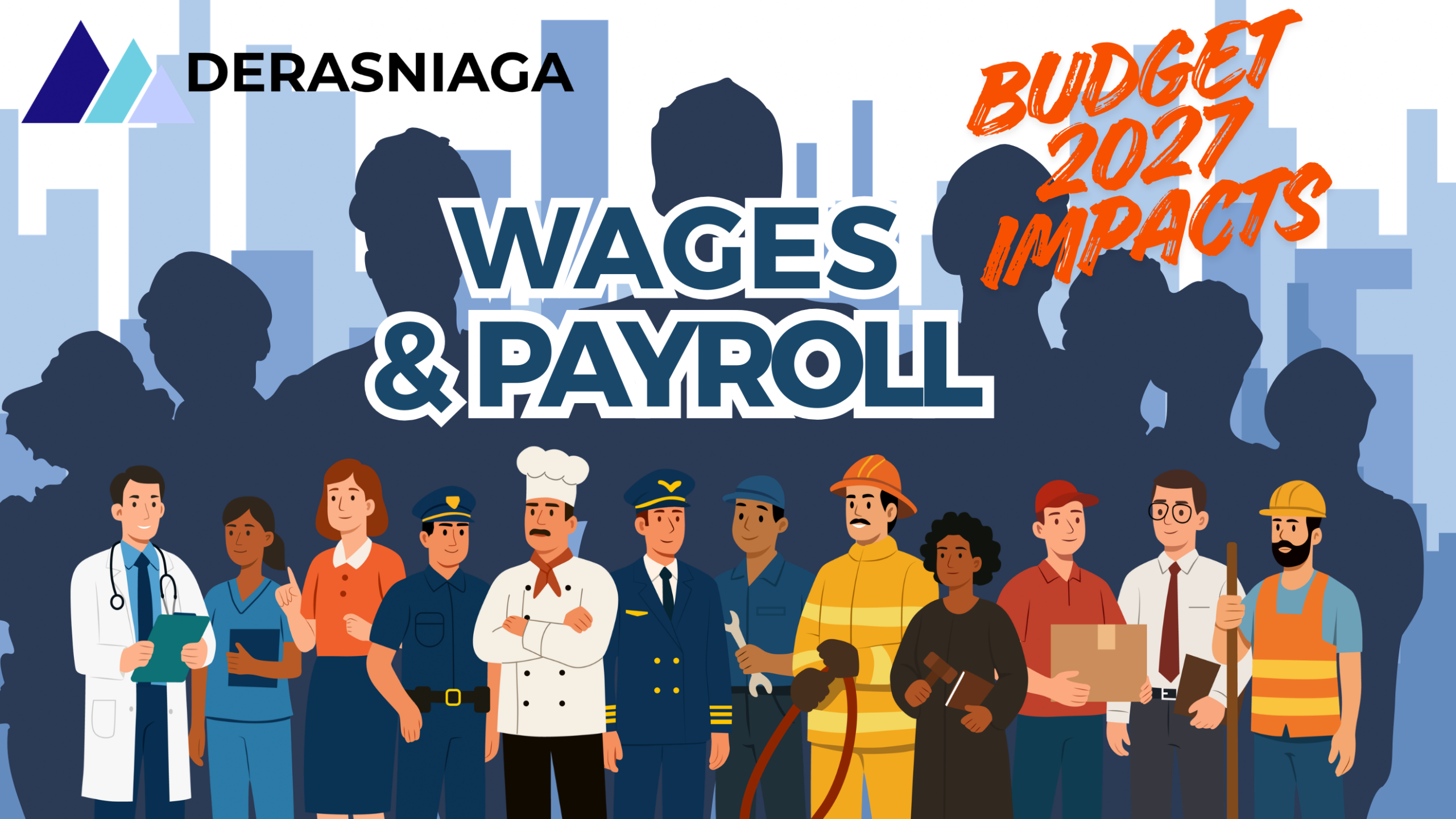
Malaysia’s Budget 2027, tabled on 9 October 2026, introduces significant changes to wage expectations and workforce development. With the minimum wage set to increase from RM1,700 to RM2,000 from June 2027 and a proposed starting-pay benchmark of RM2,500 for graduates and semi-skilled workers, the Budget also provides tax incentives, training support and talent-attraction measures. For businesses, these developments signal the need to prepare for higher labour costs, stronger compliance requirements and increasing demand for skilled talent, making workforce planning and cost management more important than ever.
Budget 2027 at a glance
The measures below matter most to hiring, pay and workforce planning. Several are announced intentions, so detailed rules still need to be gazetted.
| Measure | What was announced | Timing |
| Minimum wage | RM1,700 to RM2,000 a month; including foreign workers; MSMEs with annual sales under RM50 million are exempted. | June 2027 |
| Starting-pay benchmark | RM2,500 a month for semi-skilled workers and graduates, as the first step of a wage framework reform | Pending official guidelines by Human Resource Ministry |
| GLIC/GLC living wage | Benchmark raised from RM3,100 to RM3,400; about 230,000 workers | Announced commitment |
| Wage deductions | Non-MSME companies may claim wage deductions only if wages are paid through bank accounts | Tax rule, intended to curb undocumented hiring |
| Skills funding | RM3 billion for HRD Corp (3 million training places), RM8 billion for TVET, RM500 million for PTPK financing | 2027 |
| Training tax deduction | Deductions for company-provided training | 29 Jun 2026 to 31 Dec 2030 |
| Bakat MADANI | Target of 30,000 new job opportunities via TalentCorp | 2027 |
| Individual tax | Relief limit from RM9,000 to RM12,000; 1 point rate cut in the RM70,001-RM150,000 bands; 30% rate above RM1 million | YA 2027 (proposed) |
| Gig workers | RM160 million Grab co-funded package; SOCSO matching of 35% (50% if platform pays); EPF matching up to RM600 a year | From 2027 |
| Expatriate talent | Spouses of Category I Employment Pass and Dependant Pass holders may work; nomad pass extended by two years; 5-day target for preliminary EP applications by MyABE-listed firms | Spouse rule from 1 Jan 2027 |
| EPF | Every citizen auto-registered as an EPF member at 18 | Announced |
Impact on companies
Larger employers with annual sales of RM50 million or more face the clearest cost increase, while smaller firms get a grace period but not a permanent exemption from the wider trend.
- Payroll cost. The RM300 rise is about 17.6% on the old floor. Imagine existing 200 workforce comprise of foreign workers for a manufacturing company earning basic salary of RM1700 per month, their cost will increased by RM60,000 a month which translates into RM7.23 million per annum (200 workers x RM300) from June 2027 which is a direct hit to their margin.
- MSMEs get time, not certainty. Businesses under RM50 million in sales are exempt for now, but the government framed this as time to adjust their business models. The Malaysian Employers Federation welcomed the notice period while asking for clear rules.
- Graduate and semi-skilled hiring costs more. If RM2,500 becomes the starting benchmark, entry-level offers in many sectors will need to be revised. Employers argue pay should track productivity and skills, and warn that skills mismatches could add training costs on top of wages.
- Compliance tightens. Non-MSME companies lose wage deductions unless pay goes through bank accounts, and employers need Labour Department approval before hiring migrant workers. Firms relying on informal labour face the biggest adjustment.
- Money to offset the cost. Training deductions, RM3 billion through HRD Corp, RM57 billion in loan guarantees and a RM10 billion BNM facility for SMEs hit by the West Asia conflict soften the squeeze, though only for firms that use them.
- Better access to global talent. Faster Employment Pass processing for MyABE-listed firms and spousal work rights make Malaysia easier to sell to senior expatriates.
Impact on workers
Most workers gain on take-home pay and protection, but the gains are uneven: those at MSMEs under RM50 million in sales may wait longer for the new floor.
- Higher floor. More than 4 million workers are covered by the RM2,000 minimum wage. The government says labour compensation is only 33.9% of GDP and wants the productivity-wage gap closed.
- Better starting pay for graduates. A RM2,500 benchmark responds to the complaint that qualified entrants are paid close to the floor. The scope and enforcement mechanism are still to be defined.
- More disposable income. The relief limit rises to RM12,000, and the Budget expects about 5 million taxpayers to keep up to RM1,600 more. New reliefs cover items such as parental care, children’s tuition, sports shoes and AI subscriptions. Income above RM1 million is taxed at 30%.
- Gig workers. Around 600,000 e-hailing and p-hailing workers get a RM160 million package; median net income is projected to rise by up to RM227 a month for drivers and RM100 for delivery riders. SOCSO and EPF matching incentives give them social protection, and a minimum income formula is due in early 2027.
- Retirement savings start earlier. Auto-registration for EPF at 18 brings young workers into the system sooner.
- Training and mobility. HRD Corp’s 3 million training places, free Coursera access and 100,000 free AI subscriptions give workers a cheaper route to upskill.
- Public sector. Civil servants in the lower grades get RM1,500 in assistance, and pensioners RM750; the minimum pension rises from RM1,000 to RM1,350.
The impact on Non-MSMEs
For non-MSMEs, the Budget is both a cost event and a signal to investors, so the wage impact has to be explained to the market as well as absorbed.
Where earnings are exposed
Margin pressure in labour-heavy sectors. Manufacturing, plantations, food service and logistics carry the largest share of workers near the floor. Most listed companies will have sales above RM50 million, so these firms will be busy adjusting their workforce wages and payroll and this will impact their bottom line. Another question to ponder in compliance with the minimum wages, whether these additional cost will be absorbed by end consumers like us and eventually whether the tax incentives relief is meaningful enough to absorb the rising cost will be another topic for discussion.
Supply-chain compliance. Wage deductions depend on bank-paid wages, and migrant hiring needs prior Labour Department approval. Listed companies should check that contractors and labour suppliers meet both rules.
Investor and ESG scrutiny. The Prime Minister cited GLC and GLIC living wage commitments, and banks and oil and gas employers, as examples for the private sector to follow. Expect analysts and ESG raters to ask where each company stands.
Where the Budget helps
- Training deductions and funding. Company-provided training is tax deductible from 29 June 2026 to 31 December 2030, and HRD Corp has RM3 billion for 3 million places, which lets firms pay for productivity while wages rise.
- Capital and growth. GLICs will invest RM25 billion domestically through GEAR-uP, including higher-value semiconductor segments, and RM1 billion in guarantees is earmarked for local companies expanding through mergers and acquisitions.
- Senior and regional talent. The Securities Commission and TalentCorp will facilitate preliminary Employment Pass applications for MyABE-listed companies, targeting five working days, and expatriate spouses can work from 1 January 2027.
- Consumer demand. RM16 billion in STR and SARA aid, plus tax relief worth up to RM1,600 for about 5 million taxpayers, supports spending for consumer-facing listed companies.
- Better global-services incentives. The Global Services Hub incentive is being improved from January 2027, which matters for companies running regional shared-service operations.
What to do before June 2027
- Audit payroll now. List every role paid below RM2,000 and RM2,500, and confirm whether the MSME exemption applies (annual sales under RM50 million).
- Rebuild salary bands. Re-benchmark graduate, semi-skilled and mid-grade roles so pay gaps between levels do not collapse.
- Claim the training incentives to upskills existing workers. Plan HRD Corp-funded and deductible training so wage growth is matched by productivity.
- Tidy foreign-worker records. Keep proper records of workers permits, Labour Department approvals and SOCSO registration for every migrant worker.
- Watch for the details. Wage order gazettes, the definition of semi-skilled roles and the gig-worker minimum income formula (expected early 2027) will decide how much changes in practice.
Sources
- Human Resources Online: employer guide to wages, training and gig workers
- Malay Mail: minimum wage to RM2,000 from June 2027
- The Edge: MSME exemption below RM50 million
- The Sun: RM2,500 starting wage
- Malay Mail: six initiatives to attract global firms and skilled talent
- Malaysiakini: wage deductions tied to traceable payments
- SAYS: Bakat MADANI and TalentCorp initiatives
- Market Business News: employer reaction to the minimum wage